AI Headbands?

In primary schools, China is using AI headbands to track productivity during class. In a video from the Wall Street Journal, they explain that different colors on the band represent what the student is doing. Red means a student is deeply focussed, blue means that a student is distracted, and white means that a student is offline. The headband they are using has three electrodes, two behind the ears and one on the forehead. The sensors pick up electrical signals from neurons in your brain. This information is sent in real time to the teacher’s computer to track productivity. The technology being used in the headbands is called electroencephalography (EEG) (WSJ). This form of technology is very advanced, and is technology that is mainly used by doctors in hospitals and labs. Even though this technology is very advanced, it is susceptible to error so if a student itches themselves or makes a slight fidget, the machine can record a false reading. Despite this, most teachers are saying that because of the headbands, students are doing a better job at paying attention in class. With this, there is also some backlash, because many students are talking about how the bands are uncomfortable, and how the band creates pressure because many students are getting disciplined by parents for low concentration scores. Regardless of some students’ opinions, scores have been at an all time high because of  the bands, and they will most definitely be used in the future. 

Monitoring systems are also being used in classrooms to track your mood throughout class to see if you are focusing well. Classrooms in China are implementing an AI camera program that will track every time you yawn, put your head down, and go on your phone. This information can also be easily accessed, and is automatically sent to parents and teachers. Schools also use “Smart Uniforms” that can track their location to make sure that students are attending classes. A lot of people view this also as a human rights violation because they are watching your every move during class, but many people also understand that this is the start of AI Education, and if it is for the country’s development, people will support it. Even if people are against it, the government is already making the transition to AI Education putting billions of dollars into the project. One of the concerns from the use of AI software in the classroom is where the information is going. Most of the information that is being recorded for the classroom is being given to government funded research projects. Although this might seem alarming to some people, most parents when asked if they cared that their kid’s information was being used by the government were indifferent, even if the programs didn’t have privacy protection at all, which was the majority of them. Overall, as China makes a huge push for implementing AI into the real world, China determined that over 200 million students have been able to raise their grades because of AI in their classes (WSJ).

Sources:

Wall Street Journal: https://www.youtube.com/watch?v=JMLsHI8aV0g

Week 5 Recap in Taiwan

Hi guys! I am here to recap one of the best weeks so far. Although this week was very busy, I made so many 忘不了的经验 (unforgettable experiences). One of the highlights of this week was 清华之夜 (Qing Hua Night). This was a night where we would perform for our teachers, host family, and language partners. The requirement was that each class needed to put on a 15-20 minute play, so our class did 十二生肖比赛 (The Zodiac Race). The Zodiac Race essentially explains the origin of the Chinese zodiac, and the story is essentially a race where your position in the race dictates the order in the Chinese zodiac you are in. I was the 老鼠 (rat), and since the Rat is the first animal in the Zodiac, I won the race. It was a fun experience acting out my scene because in the story, every animal has to cross a river, but the rat doesn’t know how to swim, so the rat begs the cow to help him out, so in our play I rode on one of friends back who was playing the cow, and the crowd thought that was funny. I also last minute helped out Sam and Nikhil, to friends from NSLI-Y with their song 飘向北方. Although I learned the song at the very last minute, we put on such a great performance, and had the whole crowd clapping. What was especially awesome about 飘向北方 is that it has a lot of rapping in the song, and Sam was about to rap all of it perfectly. Chinese is already hard, so trying to rap in Chinese is 10 times harder but Sam did it very well. After putting on a spectacular performance, we went to our host family for the weekend. As usual we went to many different places, but some of my favorite places were the science museum. Now when my host family told me we were going to a Science Museum, I thought of my local science museum back home, but I was very surprised to see the museums in Taiwan. The museum was 10 (fact check) floors, and was the nicest museum I think I have ever been into. At the Museum there were a lot of interactive things that you could do there. One of the coolest ones was riding a bike on a rope. Watching someone do it, It looked very scary, but when I did it myself, It was actually very stable because there was a counter weight under the bike. After going to the Science Museum, I was very curious why they had such a huge museum for science. It made me think about 三民主义 (Three People’s Principles) with them being Science, Democracy, and Ethics. It overall made me realize how important science is to Taiwan. Finally, our host family took me to 十分老街 (Shifen Old Street) where we made our own 十分放天燈 (sky lanterns). Me and my host family chose the colors blue, white, pink, and purple. Each color represents what you want to have in your life. Blue represents a good career, white represents a bright future, pink represents bliss and joy, and purple represents doing good in school and studying hard. After getting our lantern you are able to write whatever you want on the lantern. I decided to write about how I was going to miss my host family, and how I wanted a future career using my Mandarin. Making the lantern was a great way to end my time with my host family, and it made me realize that my trip was coming to an end. It was kind of sad doing it because I knew it was going to be the last activity I would do with my host family, but all good things have to come to an end. 

Week 4 in Taiwan

大家好!I am back with my week 4 recap, and this trip has flown by. One of the highlights of my trip was my 口语报告 (Speaking Report), because although it was a little nerve racking to present in front my class, I learned so much about my topic. I talked about 中正纪念堂 (Chiang Kai-shek Memorial). In my presentation, I talked about the architecture of the Memorial, the 卫兵交接 (Changing of the Guards), and comparing the Chiang Kai-shek Memorial to the Lincoln Memorial. Besides this, I have been eating so much 刨冰 (shaved ice tsua bing is how you pronounce shaved ice in 台语), a desert that Taiwan is known for. It is very different from American shaved ice with Taiwanese shaved using more natural flavors. I have also been having so much fun with my 语伴 (language partner). It is  a requirement to meet with our language partner 4 hours a week, and during these hours, we usually go out to eat or go do an activity. For example, this week I went to play table tennis with my language partner, and I had so much fun! Despite doing a bunch of activities with my language partner, we were of course practicing Mandarin, and this week I asked my language partner Jacky to teach me some slang. He responds by just saying “nie”. At first I was very confused because I wasn’t sure what that even meant, but essentially “nie” is a way to say something is very so-so. After Jacky taught me “nie”, we met up with some other NSLI-Y students, and one of them was talking about how pretty the moon looked today. Seizing the opportunity, I responded with “nie” and after everyone was laughing. Some other Taiwan slang I learned was 真的假的?(Seriously?). 真的 by itself means really, and it was many people say in China when they are surprised by something, but in Taiwan, many people will say “真的假的?”. Unfortunately, I didn’t get to see my host family this weekend, but the group went to 日月潭 (Sun Moon Lake). Sun Moon Lake was so pretty, and the water looked very clear. I also thought it was very interesting because many people were asking if we could go swimming in Sun Moon Lake, but we weren’t able to because they actually only have a specific time of year that you can swim in Sun Moon Lake (elaborate more). While we were in Sun Moon Lake, we also visited a tea factory which was very cool, because they showed us the process of how they make specific types of tea, and I was able to buy some tea for my mom and grandparents. Overall, I had so much fun traveling to a different part of Taiwan this week, and learning some new slang.

Week 3 in Paradise!!!

大家好!I am back with my week 3 recap and I have been having so much fun in Taiwan. I started off the week with 卡拉OK (Karaoke) with some friends and we had so much fun! Despite not knowing many Chinese songs, we still had so much fun, and even sang some English songs like Baby by Justin Bieber and We All Live in a Yellow Submarine by the Beatles. This week, I have also really been enjoying classes because I have a great relationship with my teachers, and I am learning so much! I would tell you all the amazing things that we did during class, but what is far more interesting is what I did with my host family. The first time I visited my host family, it was very awkward, but this time it was a lot better, and I was even able to crack jokes in Chinese. One of my favorite conversations I had over the weekend was when my host mom was talking about how my host sibling has a 女朋友 (girlfriend). When his mom told me that he had a girlfriend he replied saying 不是,不是,她是我的BFF (No, No She is my BFF). After hearing this I asked my host sibling if he thought she was pretty, and he merely shrugged. After this I was dying laughing, but what really made me laugh was when my host mom told me that his “BFF” was very rich, and had a lot of money. After hearing an important trait of his BFF I told my host brother that he should continue being “BFF’s” with her and everyone started laughing. Despite having so much fun talking with my host family, we went to many different places as well. 

Some highlights from my host family weekend was when we did DIY 米粉 (Rice Noodles) because we got to make our meal, and it was some of the best noodles I have ever had. Another highlight was going to the 玻璃艺术工作室. You might think that dealing with a blow torch and fragile materials while being instructed in Chinese is a recipe for disaster, but it was amazing, and I was able to make a glass leaf. Although we did go to many places over the weekend, at their home, we also had fun playing Just Dance on the Nintendo Switch. Despite my dancing skills being very 马马虎虎 (so/so), I still had so much fun. Our host family also took us to the 原住民 which was very cool. In the 原住民, we lived like the Hokka tribe, and they taught us tribal dances/songs,  how they would set up traps to catch birds, and they even taught us 射箭 (archery). We also did DIY rice and cooked rice in a shaft of bamboo, which was a very cool experience. Overall I had so much fun this week in Taiwan, but through all of the activities I did this week, I noticed a lot of cultural differences. One that I thought was very interesting was when I was walking to find some dinner and I encountered one road that went both ways. I thought it was very interesting because I watched cars go through this road from both sides for a while, and wondered why this wouldn’t work in the US. Another cultural difference was when I went swimming in Taiwan. For starters my host siblings didn’t know how to swim which was a shock for a Floridian who swims more than he walks. Also before we got into the pool, the lifeguard yelled at us and told me “你需要戴游泳帽子” (You need to wear a swimming cap). In the US it is pretty normal to not wear a swim cap unless you are swimming for competition, but everyone in the pool in Taiwan was wearing a swim cap. Despite this I had so much fun this week, and I am so excited for next week.

Taiwan Recap Week 2

大家好!I have been in Taiwan for around 2 weeks now, and I am here to share what happened this week. My classes are getting a lot better because I am getting used to the heavy workload, and my teacher’s teaching style. Despite this, I still haven’t gotten used to bringing toilet paper into your stall before going to the restroom, and I might’ve forgotten while at school. Even though so much happened at school, the key part of my week was this weekend. Over the weekend, I met my host family for the first time. Normally, we are in a hotel on weekdays because I have to go to classes, but we stay with our host families every other weekend. This weekend was my first time meeting my host family, and I was really nervous, but I ended up having so much fun. My host family consisted of my host mom, dad, and two host siblings ages 9 and 7. My host family took me and Carson all over Hsinchu, but some of the highlights for me were the 擂茶(Pounded Tea) DIY. It was very good, and I wanted to take some home. Another highlight from my weekend was when my host family took me to a petting zoo, and I saw a capybara for the first time! Seeing a capybara was honestly a life-changing moment, and it made me very happy. Besides all of the great excursions my host family took me on, I noticed so many different things during my time with them. Before leaving to live with my host family, I thought that living with my host family was going to let me escape the “American Bubble” and only practice my Mandarin, but I was very wrong. Both of my host siblings were very westernized watching movies like the new Super Mario Movie, and asking me if I listen to Michael Jackson. One of my host family siblings saw a picture of my friend Jacob, and asked me if that was Michael Jackson. I laughed and responded by saying 不是,我的朋友。 No, my friend. She replied saying 迈克尔杰克孙是你的朋友? Michael Jackson is your friend? Despite noticing some very Westernized traits, I also saw many cultural differences like turning off AC in a room when you aren’t in it (a foreign idea for Floridians who enjoy freezing themselves with AC). Or my host family stuffing me with food nonstop, despite me saying I am full. After we got back to the hotel from our host family, Carson told me “Bro, you were a trooper, I don’t know how you managed to eat all of that food, but I was rooting for you the whole time”. Overall, I had so much fun this week, and I am so excited to go back to my host family soon. 

Interview with Jeffery Ding

你好!I am back with another very interesting post regarding AI. 我觉得人工智能最近随处可见,但是很多人抓不住人工这能的重点。(I think AI has recently been seen everywhere, but many people can’t grasp the importance of AI). To help myself and you guys understand more about AI, I interviewed Jeffrey Ding an assistant professor of political science at George Washington University who published a newsletter called ChinAI where Ding posts weekly translations of Chinese language writings about AI-related topics 

Questions I asked:

Why did you make ChinAI?

Ding was inspired to start ChinAI after researching AI in China, and after sharing these articles with friends and colleagues at the Center for Governance of AI, and there was a huge demand for it. The demand for more translations led to Ding forming a newsletter which is how ChinAI was formed. 

What was one of the interesting articles you have translated?

Ding replied saying that one of the most interesting articles he has translated was from a Qinghua Professor of Law Lao Dong-yan (勞東燕). The article was a very strong criticism of the Beijing Metro, and their attempts to install facial recognition in the subway for security. Ding thought that this article was very surprising because of the criticism out in the open and that this article shows that there is some pushback from Chinese citizens/academics against intrusive applications of AI. 

After this question, I talked about a previous conversation in a different meeting where Ding talked about a guy that went into a real estate firm with a motorcycle helmet because the firm would use face ID to discriminate against customers, and the motorcycle helmet guy became viral. Ding replied saying that one of the largest issues with Face ID in China is price discrimination, which is one of the reasons why Ding believes that this went viral. Ding also talks about how because of the motorcycle guy, there was a lot of pushback from Chinese citizens which led to China trying to add more stringent personal information protection regulations, but it hasn’t been approved yet, so we shall see if companies will be willing to comply with these regulations. 

I have been studying the war over semiconductors specifically in China, and I have been seeing this common theme of China copying many people’s ideas outside like the US, and do you think that this will eventually lead to the downfall of China just because they are copying a lot of different things? I also gave Ding an example from my research which was talking about Huawei using American semiconductor chips, and after the US cut off chips being sent to Huawei, the market crashed for Huawei.

Ding replied that my example talked more about the machines making the semiconductor chips. Ding also says that since the US has a strong lead in semiconductor manufacturing, even if Huawei knew how to make their own chips, it would be very difficult for them to replicate them because Huawei doesn’t have the advanced machinery that the US has to make semiconductors. Ding does agree though that part of the reason is that China does rely on foreign suppliers for key parts of the semiconductor chain, but he reminds me that in general that everyone is reliant on others. So even the US doesn’t have a self-sufficient semiconductor supply chain. Most of the US’s advanced semiconductors are manufactured in Taiwan, even though they are designed in the US. Ding believes that China is trying to take control of a part of the semiconductor supply chain where they can be very strong so other countries can’t cut off their access.

The next question I asked Ding was regarding one of the articles he translated called Taiwan Skin Mainland Bones. I was curious why Taiwan uses Chinese tech. https://chinai.substack.com/p/chinai-214-taiwan-skin-mainland-bones 

This article was looking at specifically why Taiwanese surveillance was the same as a Chinese product from Hikvision. The main reason is that it is very difficult to enforce things like Made in Taiwan, Made in China, or Made in the US because you can’t just slap that onto a product. Part of the reason why they are relying on Chinese equipment is because it is cheaper, and it is one of the leaders in surveillance, so the Taiwanese company that is partnered with Hike Vision benefits from buying cheap equipment and selling it under the Made in Taiwan. Ding also talks about how there were provisions for selling Chinese equipment under a different name and this was also another thing that was very hard to enforce. 

I asked Ding a follow-up question asking if Taiwan was putting Made in Taiwan over Chinese products because of the relations between Taiwan and China. 

Ding replied saying that it was because Taiwan made a prohibition on public entities from using these Chinese security products. This is because Taiwan is nervous about spying and espionage which is why the Chinese government doesn’t want public entities to use Chinese surveillance systems. Because whatever footage is being recorded or communicated could be given back to the Chinese government.

What is your view on Tiktok? I have been seeing alot of news reports on how the Chinese government is taking and stealing information from Tik Tok users.

Ding believes that there are very real concerns about what data is being collected, and whether the Chinese government has influence over that part of Tiktok. He thinks that the security risk isn’t that high, because there isn’t much of a risk for blackmail when it comes to what US officials are looking at on Tiktok. Despite this, Ding is far more concerned about Tik Tok being used as a platform that enables influence operations, supports and boosts content that is in favor of the Chinese government, and suppresses content that is against the Chinese government. Overall, Ding believed this is far more troubling than the Chinese government allegedly collecting information. Ding further supports his point by saying that the data collecting is very real, but if the Chinese government really wanted this information, this was something that they could probably purchase from a third-party supplier so he is not as concerned about that factor. 
Overall, I learned so much about 人工智能 (AI) from Ding, and if you want to learn more, visit Ding’s newsletter https://chinai.substack.com/

Week 1 in Taiwan!!!

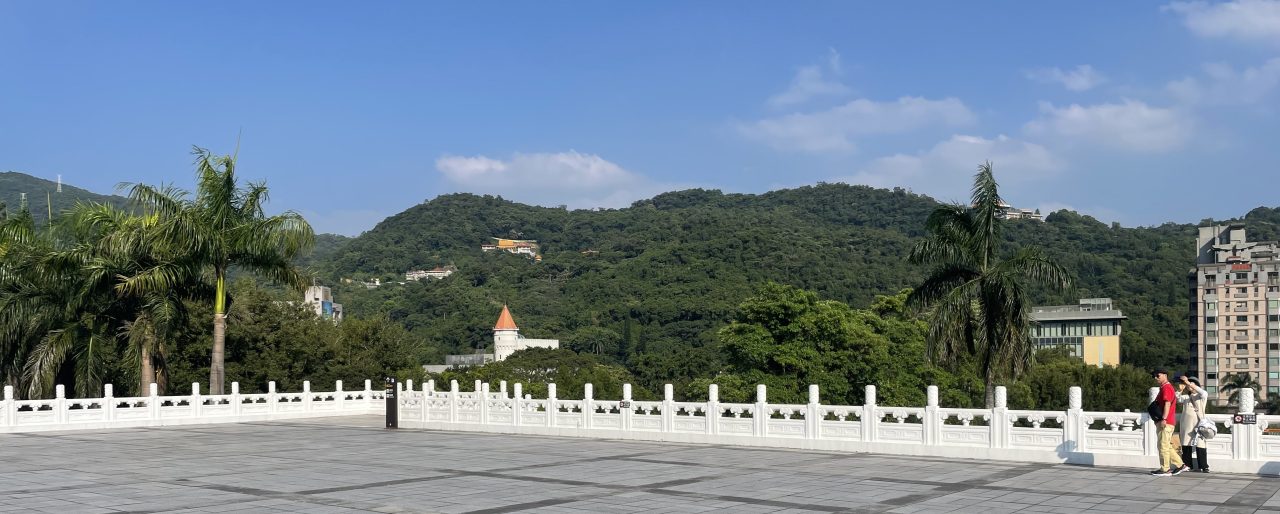
Hi guys! I have been in Taiwan for a little over a week and got through my first week of classes. For those who don’t know, I will be in Hsinchu, Taiwan this summer through NSLI-Y, a travel abroad program. I have only been here for one week, and so much has happened. One thing I have to say is that the food is great here! I’ve had so much good food like 牛肉拉面, 小笼包, and 火锅. Also, on this trip, I have been noticing the differences between American culture and Taiwanese culture. Before we got to Taiwan, our resident director was talking to us about common stereotypes of Americans being loud. When I heard that, I was kind of confused, but I soon realized how loud not only the group is, but how loud I am personally. This was evident on the bus where our group was being pretty loud, while everyone else on the bus was quiet. Another cultural difference would be that in Taiwan a lot of people use scooters, whereas the most popular mode of transportation in the U.S. is cars. As far as academics, the classes through the program are super rigorous, and I have had to study for long hours with friends, but it has still been enjoyable. I think my writing skills are improving, but I’m not sure. This weekend we went to Taipei, and it was super awesome. We first went to 中正纪念堂 Chiang Kai-shek Memorial. It was very interesting because 中正纪念堂跟林肯纪念堂一样. After we went to eat 小笼包 at Din Tai Fung. They were very good, and super cool because the restaurant we got them at was known for their 小笼包 and how they make 18 different folds on the dumpling. After that, we went to Taipei 101, which is the second-largest skyscraper in the world, and has the fastest elevator. The view from up top was very cool, and I was able to take a lot of pictures. I also got to see this huge ball at the top of the tower which was made to help the skyscraper stay balanced if there was an earthquake. Even though I was eating the best food, and visiting some breathtaking places, the highlight of my week was in the elevator when a little girl started counting in Mandarin as the elevator was going up. It was the cutest thing in the world!

“Invisible China” Book Review

I read “Invisible China” written by Colin Legerton and Jacob Rawson, and published by the Chicago Review Press in 2009. This book was 232 pages long, and the ISBN # is 978-1-55652-814-9. Like both of the authors, before writing the book, I had no prior information or knowledge about the 56 different ethnic minorities in China. It is very interesting because, out of the 56 different groups, the Han people make up 90% of the population, while the 55 minority groups make up the remaining 10%. Because the minority groups make up a mere fraction of the population, many people are not aware of said groups, which is why the authors defined the regions with the minority groups as “Invisible China”. Despite being a small fraction of the Chinese population, Legerton and Rawson do a great job explaining how significant of a role ethnic minorities have played in forming the large, populous country of China. One thing I liked from this book was that Legerton and Rawson went into detail about specific ethnic minorities in China like the Uyghurs, Kinh, or even the small Jewish group, but they also showed how the Han group represented the ethnic minorities very poorly, demonstrating why the authors defined the minority groups as a part of “Invisible China”. I also like the addition of photographs in the book because the photos thoroughly illustrate the travels of the authors, the living conditions of ethnic minority groups in China, and how the Han group represents the ethnic minority groups. Despite this book being very detailed and informative, there were many times where villagers would ask the authors about politics, but the authors would ignore their comments. I think it would have been nice if they had civil debates about the American and Chinese governments in order to see differing perspectives on life. Overall, “Invisible China” opened my eyes to parts of China that I had never known about and has made me more knowledgeable on the ethnic minorities in China.